

Of Raags and riches: Kala Ramnath takes us on a journey transcending music and time
BY CHIRRAG GUHA
PUBLISHED: JAN 10, 2024 02:14 PM IST, 8 MIN READ
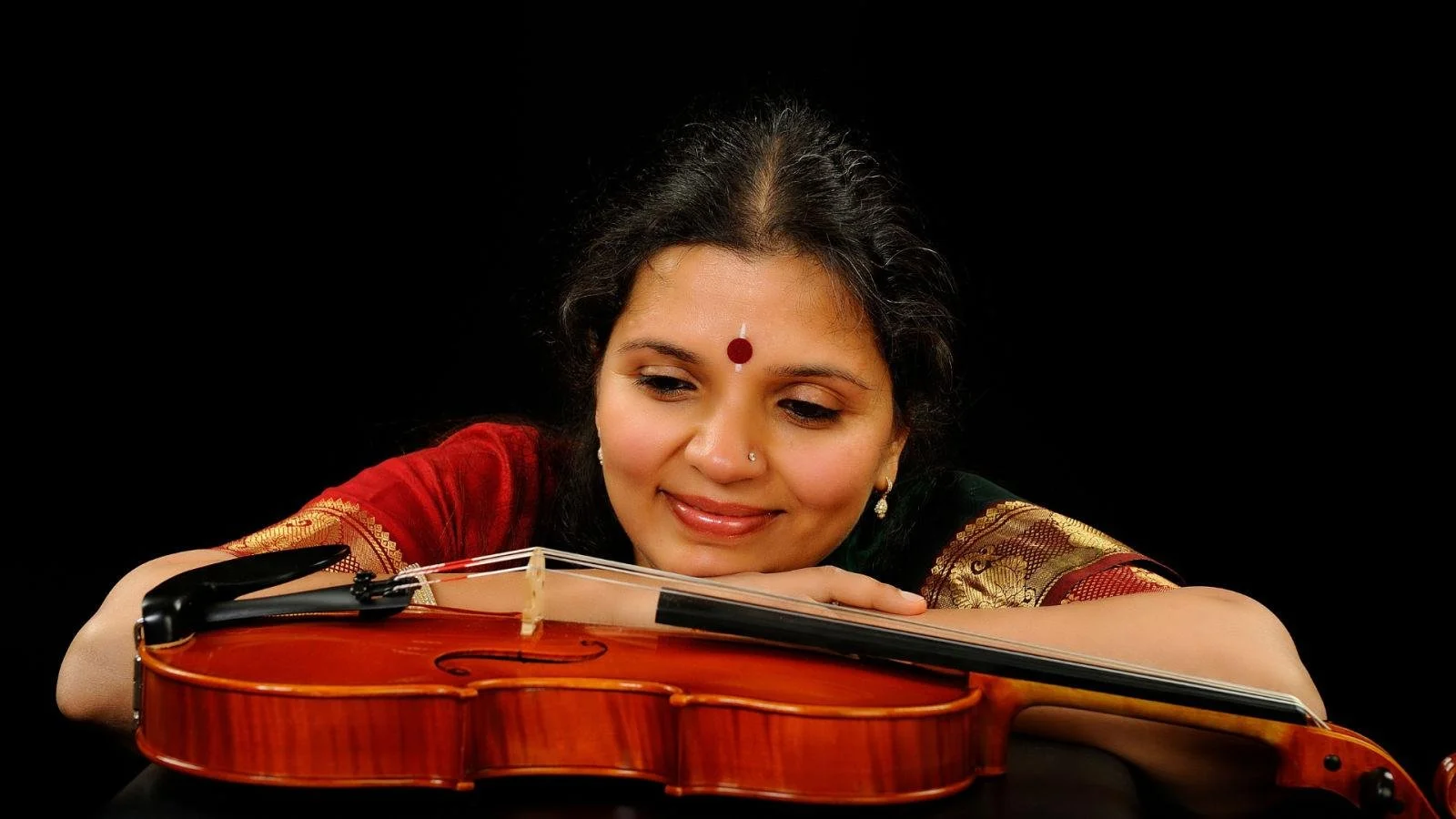
It almost seems like Kala Ramnath was born with music at her fingertips and art in her soul.
Born into a family steeped in the generational art of Carnatic and classical music that included a list of well-known musicians like Prof. T.N. Krishnan and Dr N. Rajam, it was only natural that Kala followed suit. And as if drawn to the predestined fate bestowed on her with the name ‘Kala’ translating to “performing art” in Sanskrit, it only took two years for her to first lay hands on the violin. Since then, she tells us, “That has been my life. I breathe music. There’s music in whatever I’ve done in my life. I cannot stay without music.”
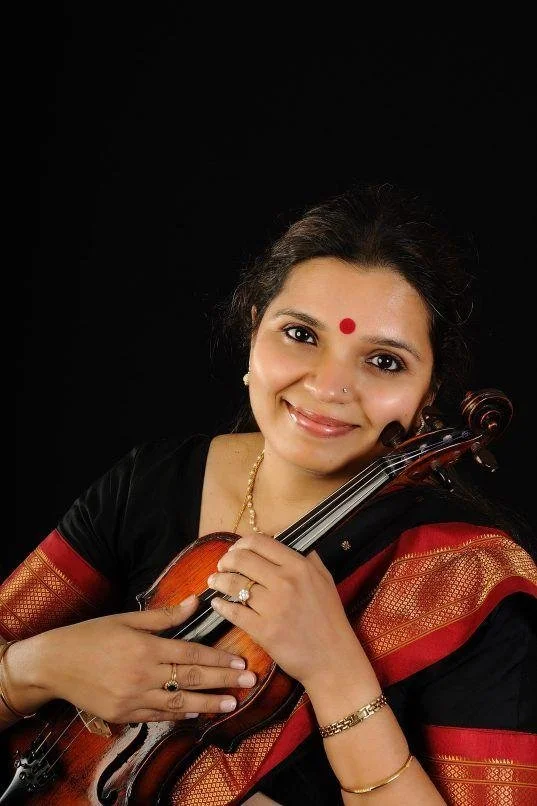
Kala Ramnath and her beloved Violin
The Sangeet Natak Academy Puraskar awardee stands as one of the world’s most acclaimed instrumentalists, featured on the Grammy-nominated Miles from India project along with her compositions on the Grammy-winning album In 27 Pieces and the Kronos Quartet’s 50 For The Future. From receiving national honours for her excellence in the performing arts to contributing to Hollywood soundtracks, the maestro is revered for her musical prowess both nationally and globally. Having graced some of the most prestigious stages in the world with her ‘Singing Violin’ including the Sydney Opera House, London’s Queen Elizabeth Hall and New York’s Carnegie Hall; to touring as part of Triveni, with tabla legend Ustad Zakir Hussain and veena maestro Jayanthi Kumaresh. It is performing on stage that truly lets Kala Ramnath’s violin sing. We catch up with the virtuoso ahead of her next performance at the Behala Classical Festival in Kolkata.
The harmony of time: Anoushka Shankar on being a Rolex Testimonee
A life in music
Before she found her distinct style of playing that led to the moniker, ‘The Singing Violin’ she was a young girl who would run back from school to listen to Pandit Jasraj and Kishori Amonkar on All India Radio with her grandfather, that is, until at the age of 12. When Ustad Zakir Hussain once told her after hearing her play, “Why would anybody want to listen to you when there is the original” referring to her playing style that closely resembled her aunt, Dr N. Rajam, a well-known violinist. “That made me think and realise that I have to bring some originality into my music. I didn’t know what to do because I was too young at that time but I knew I had to do something right, so I started by listening to a lot of different types of music. Not only Classical but film and Western music and everything that was there. I was hearing new sounds.” She tells us.
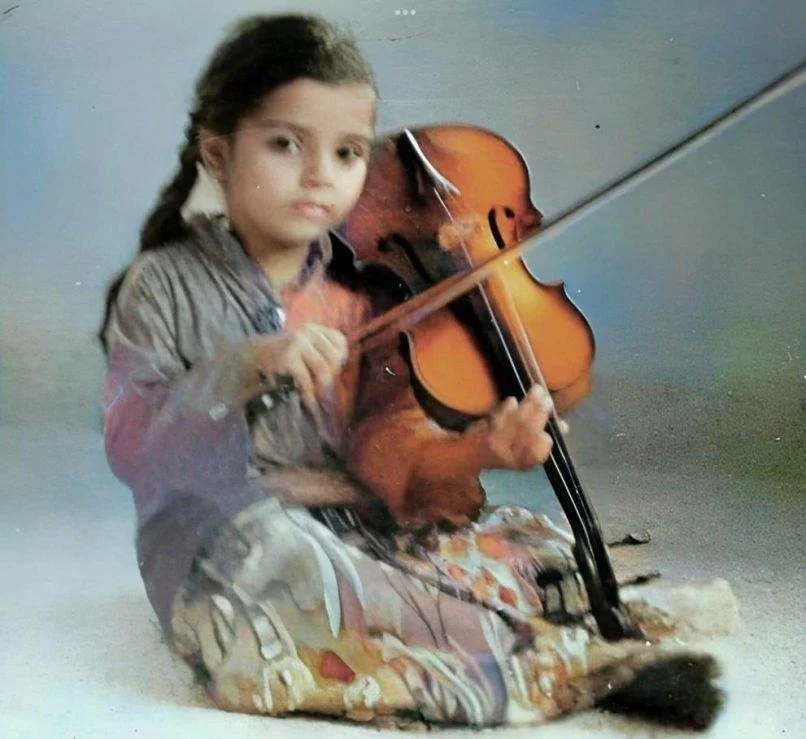
Young Kala, with her Violin
But it was only when she started learning from her much-admired idol and vocal maestro Pandit Jasraj, who also organised her first concert, that the culmination of her skills came to fruition. “I was playing to do something different from what every instrumentalist does. I do not play the instrumental style on the violin at all, I play the vocal style completely on the violin. My bowing is exactly where syllables are in a composition. It sounds exactly like singing. when I used to accompany him that’s what people felt, that there was a female singing behind.” She adds.
Her newfound style also incorporated Western bowing, often using staccatos in her taranas yet encapsulating the raw sound of Hindustani classical. This original style of playing using multiple elements not only propelled her to greater heights but to a wider audience and bigger stages as well. And while playing for a global audience she also gives a platform to a more nuanced conversation- the origin of her instrument, the violin. “The way I play it, all the people in the West cannot believe that the violin can be played like this. That is when I tell them that this is not your instrument this is my instrument,” she tells us of the Indian origin of the Violin, also called the Dhanur Veena.
A journey through time
While popular belief tells the story of the first Violin being born in northern Italy to Andre Amati, Kala’s story tells of an ancestral origin that traces the instrument to Indian soil. “Can you believe my own instrument, the violin? Everybody says it’s a Western instrument. But do you know there are sculptures and carvings in South India about 7,123 years ago? And it is a picture of the violin? There are sculptures. Even today you can go and see them.” She adds.
Tracing the musical history of the Dhanur Veena she takes us to the temple of Tirumukoodal near Mysuru wherein lays a sculpture of a lady playing Dhanur Veena and then to Rameshwaram temple where the Violin can be identified in one of the sculpture panels. This panel dates back to 5100 BCE with 7118 years of antiquity, at the tip of Kanyakumari. “From there Lord Ram went to Sri Lanka, right? Ravan, he was a great scholar and musician. Everybody knows about him. And he used to play an instrument. This instrument was called the Dhanur Veena. Dhanu in Sanskrit means the bow. Because it was played with the bow. In Sanskrit, Veena means an instrument. And that Veena, which is played with the bow. That was what they called the Dhanur Veena in Vedic times. And because his wife Mandodari was from Rajasthan. You find the instrument in Rajasthan even today. It’s long, it is a hollow body with a long fingerboard with one string. And there’s this bow-like shape which they play it with. Today you find that very Ravan Hatta in Rajasthan.” She tells us. Having quite recently witnessed the Ravan Hatta in play at the Magnetic Fields Festival in Alsisar, Rajasthan, I was quite intrigued by the instrument’s historical origin story.
A match made in musical heaven
But the identity of the violin isn’t the only thing we’ve lost in musical translation as Kala Ramnath tells us, alluding to the world of Raags- the particular order of notes of a given scale that are improvised to form melodies in Indian classical music. “Indian music is the oldest form of music in the world. And the way our music is, we had about 4,840 raags. But we’ve lost that through the years. We’ve lost it because we did not document music like Western classical music is documented. So, we do not have something to say. This is the way this Raag is sung because it has been passed on from one generation to another. I know only what my Guruji told me. Now, if I didn’t learn it right from my Guruji. Then, I teach my students wrongly. And like this, we’ve lost so much of it. Altogether, now, we have about 500 left. Out of which, only 100 are in circulation.” She says. And while much of what we know about raags has been lost in the folds of time, Kala Ramnath has gone the extra mile in preserving what’s left of it. Keeping up with the reign of the digital age she has created an online website where she documents these raags. “I’m making this online library so that people know what I’m doing. It’s a great way to know what our music is and how deep we’ve gone into music and what we have created” she adds.
Facing forward
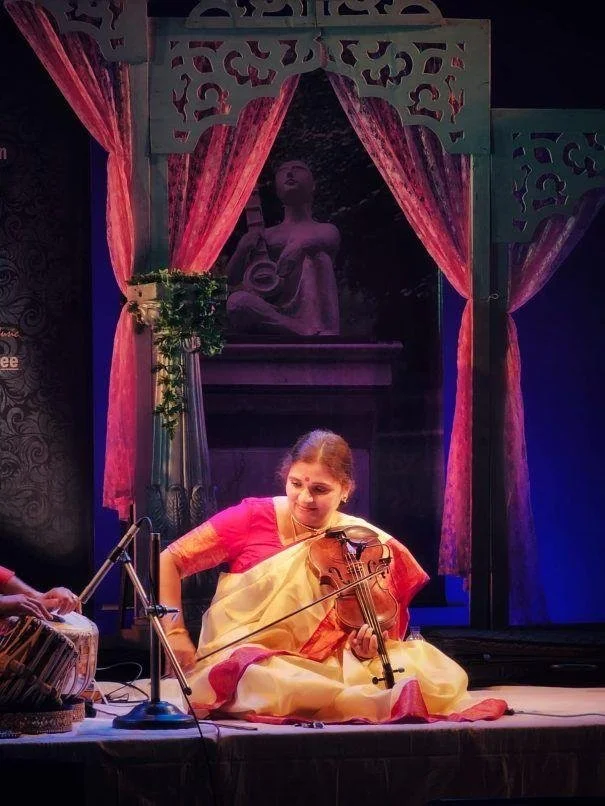
Kala Ramnath, the performer
Hindustani classical music, while renowned and loved by many, has often been overlooked due to lack of a greater platform; spread only through generational tutelage or live performances in intimate gatherings. However, keeping up with the changing times Kala Ramnath has found a silver lining in the post-pandemic digital boom, “It’s because of the digital world that so many people in the West came to know about me. If that had not been there this wouldn’t have happened. Today I played in the Richmond Folk Festival about two months ago and there were about 200,000 people there. It is when I played there that they came to know that you know violin can be played this way and that is when I told them that the ancestor of the violin is from India.” She says. Using this newfound avenue of musical appreciation, Kala Ramnath strives to keep alive the tradition and love for Hindustani classical and its cultural identity. And with the progress the world is making, she believes the future is bright for Indian classical music. “What we have is what our culture is, so this is going to become very good for us. Our music disappearing is not happening- in fact, it will flourish more with the youngsters getting into it. And that is how it will live you know? If it doesn’t evolve it will die. That is relevant. I am relevant with the times which is why I get opportunities to perform everywhere. If you are relevant with the times, then your music also evolves.” She says, shining a beacon of light for future generations of Hindustani classical musicians.
The information in this article is accurate as of the date of publication.
TAGS
CLASSICAL MUSIC KALA RAMNATH HINDUSTANI CLASSICAL VIOLINIST
WRITTEN BY
Chirrag Guha
Culture Editor
Part wild child and part philosopher with a veritable streak of whimsy, Chirrag is a lover of all things luxe. From the latest fashion trend to the new indie artist on the block, he has a pulse on all things culture. When he’s not home bartending, he’s possibly dabbling in his other passion; modeling. His daily activities include revisting his favourite art films while sipping an Americano.
